Customised façade design
Colours, finishes and a variety of textured surfaces create striking and distinctive building envelopes.

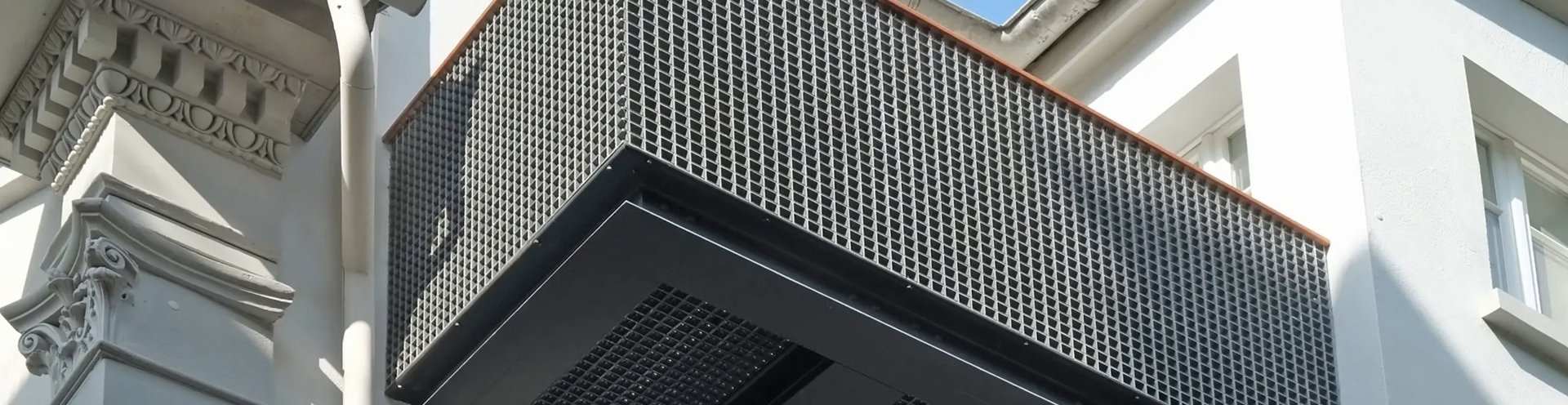
In addition to the wide variety of grating thicknesses and structures, and the extensive range of colours, this composite material is also characterised by its low thermal conductivity, load-bearing capacity and durability. The backlighting of translucent GRP panels enables architects to create bespoke, modern lighting designs and effects.
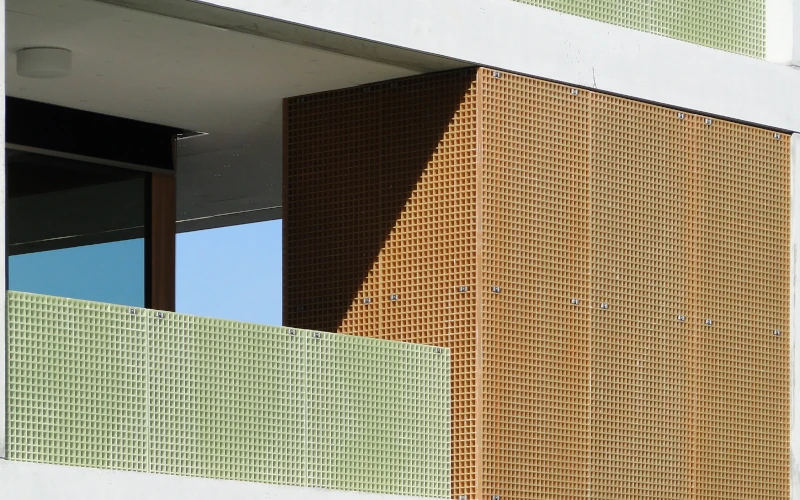
GRP offers architects a wide range of possibilities for combining functional requirements with a personalised and modern design.
Colours, finishes and a variety of textured surfaces create striking and distinctive building envelopes.
Its high resistance to weathering and corrosion reduces the maintenance required for façades and external structures.
Translucent GRP elements allow natural or artificial light to shine through, creating unique lighting effects in both indoor and outdoor spaces.
Its low weight makes it possible to create lightweight canopies, cladding and privacy screens whilst maintaining a high level of stability.
From façades and canopies to ceiling and fall protection solutions: these examples demonstrate just how versatile GRP is in combining functional and aesthetic requirements in architecture.
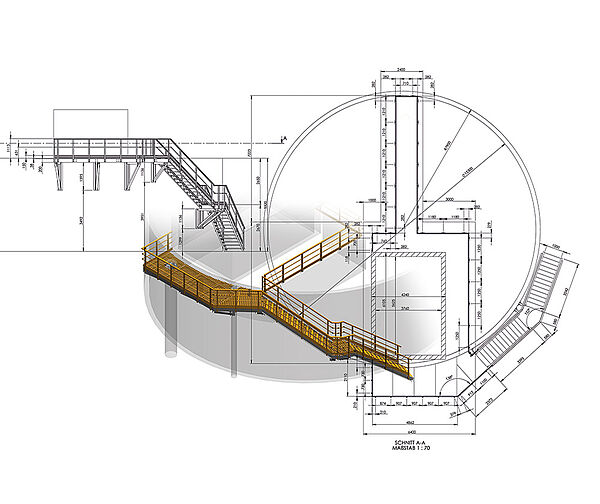
Your project
Whether it’s a standard profile, a custom profile or a complete structure – we’ll support you every step of the way, from the initial idea right through to a solution ready for installation.
Discuss the project


