Lightweight
Their low weight makes it easier to transport and install the façade elements.


GRP FACADE ELEMENTS
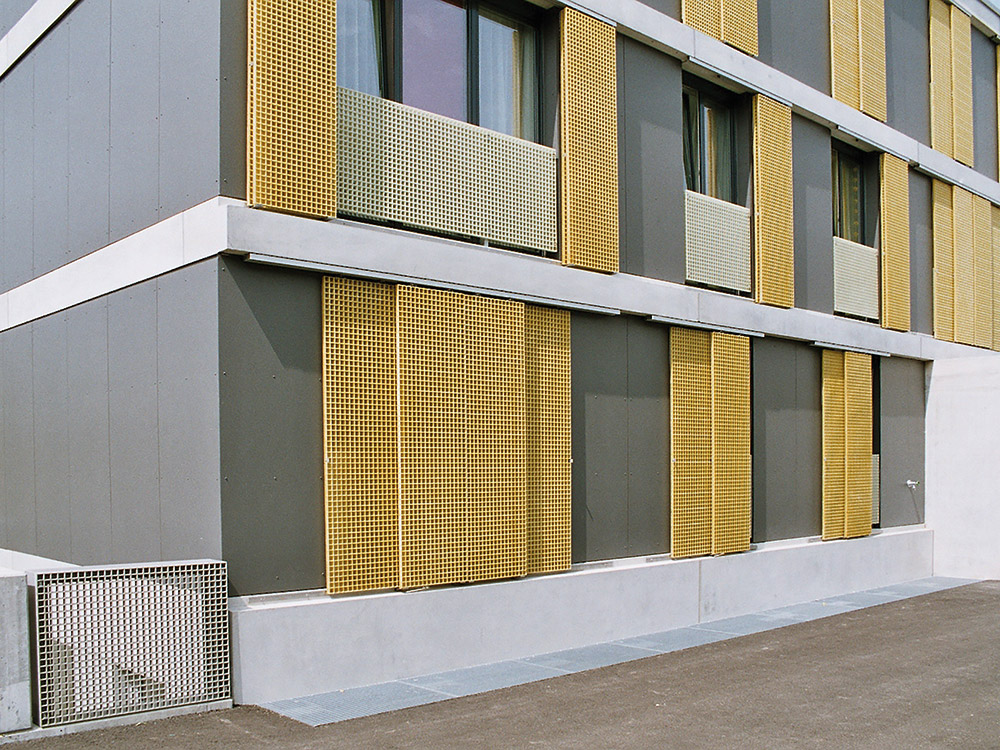
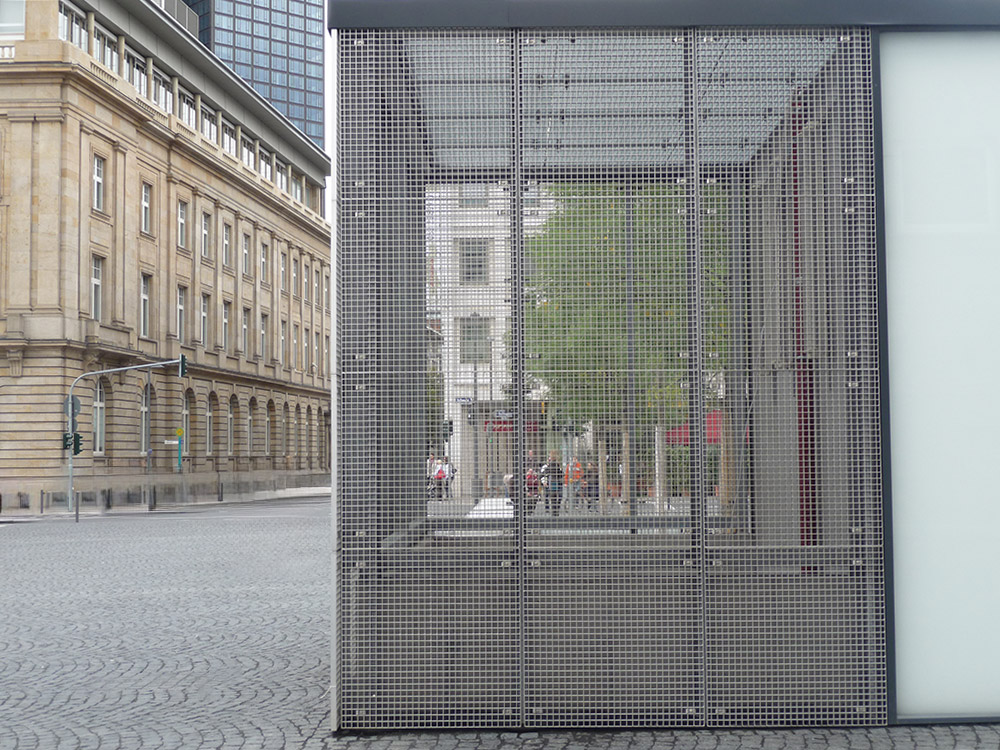
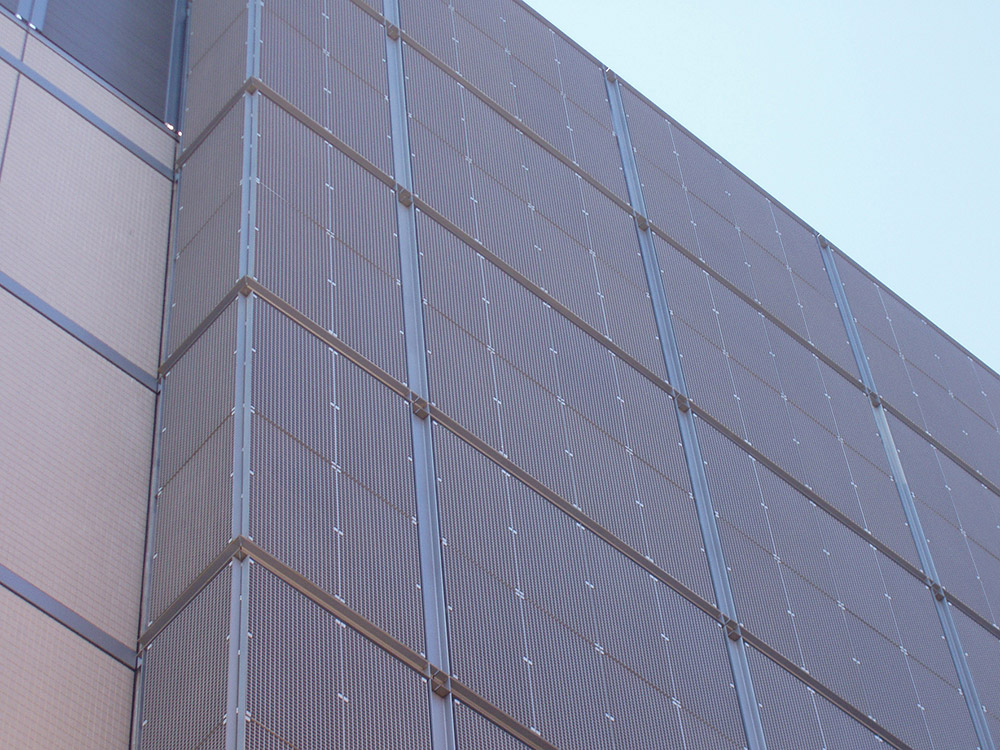
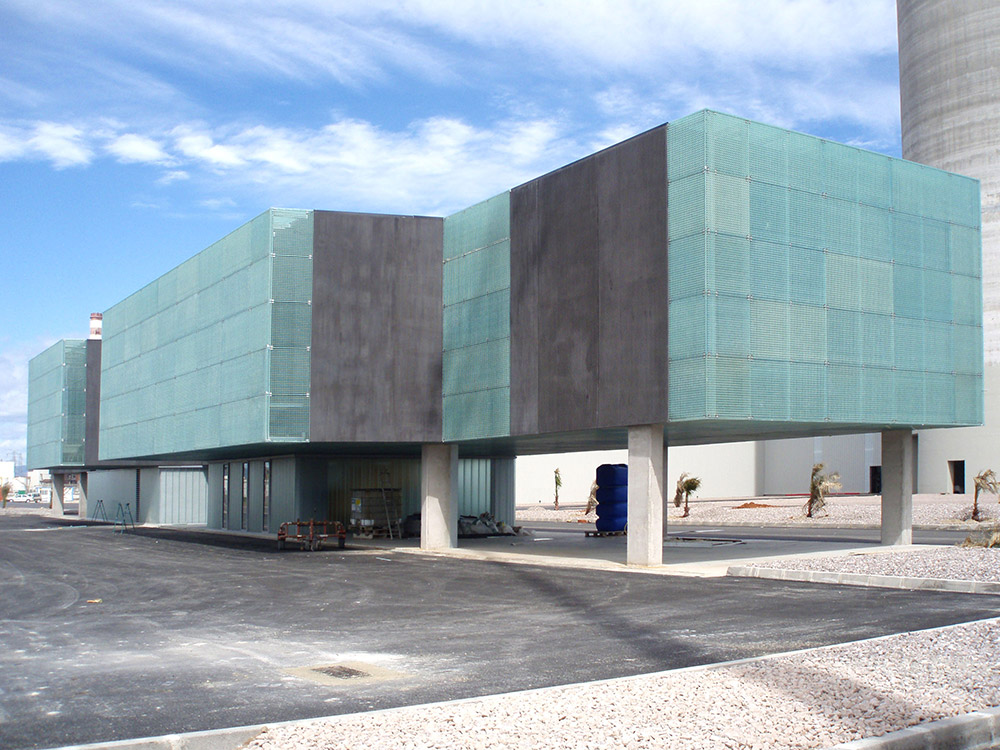
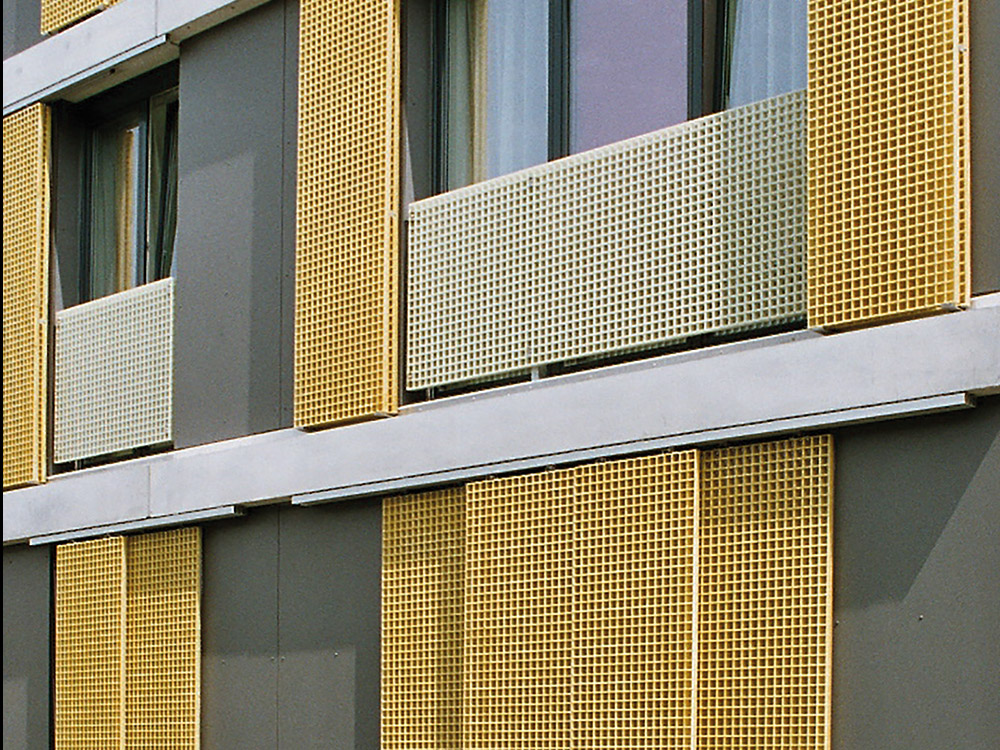
Façade elements made of glass-fibre-reinforced plastic (GRP) can be used to clad building façades. The examples on this page show applications featuring open lattice elements. GRP is characterised by its low weight and resistance to corrosion and weathering. The shape, dimensions, colour, surface finish, supporting structure and fixing method are tailored to the specific project.
MATERIAL
Lightweight, corrosion-resistant and available in various designs to meet different requirements.
Their low weight makes it easier to transport and install the façade elements.
GRP does not rust. This is an advantage for façades that are exposed to damp and the elements.
The material composition and surface finish are tailored to the weather conditions at the site of use.
The elements may vary in terms of dimensions, grid, colour and finish. The choice depends on the project.
EXAMPLES OF USE
The following images show various designs of GRP façade elements.
CONTACT
Do you need GRP components for a façade? Please send us your sketch, the required dimensions and details of the installation site. To ensure the solution is tailored to your needs, it is also important to provide information on the substructure, the fixing method, as well as the loads and fire safety requirements. We will discuss the most suitable material and surface finish with you.
Get in touchFaçade elements made from glass-fibre-reinforced plastic (GRP) offer a modern option for the design of building façades. These innovative building components combine the strength of GRP with design versatility to create aesthetically pleasing and functional façades.
GRP façade elements offer a range of benefits, such as durability and weather resistance. Their low weight facilitates installation and reduces the load on the building structure. Furthermore, they are corrosion- and weather-resistant, which increases their service life and minimises the need for maintenance.