
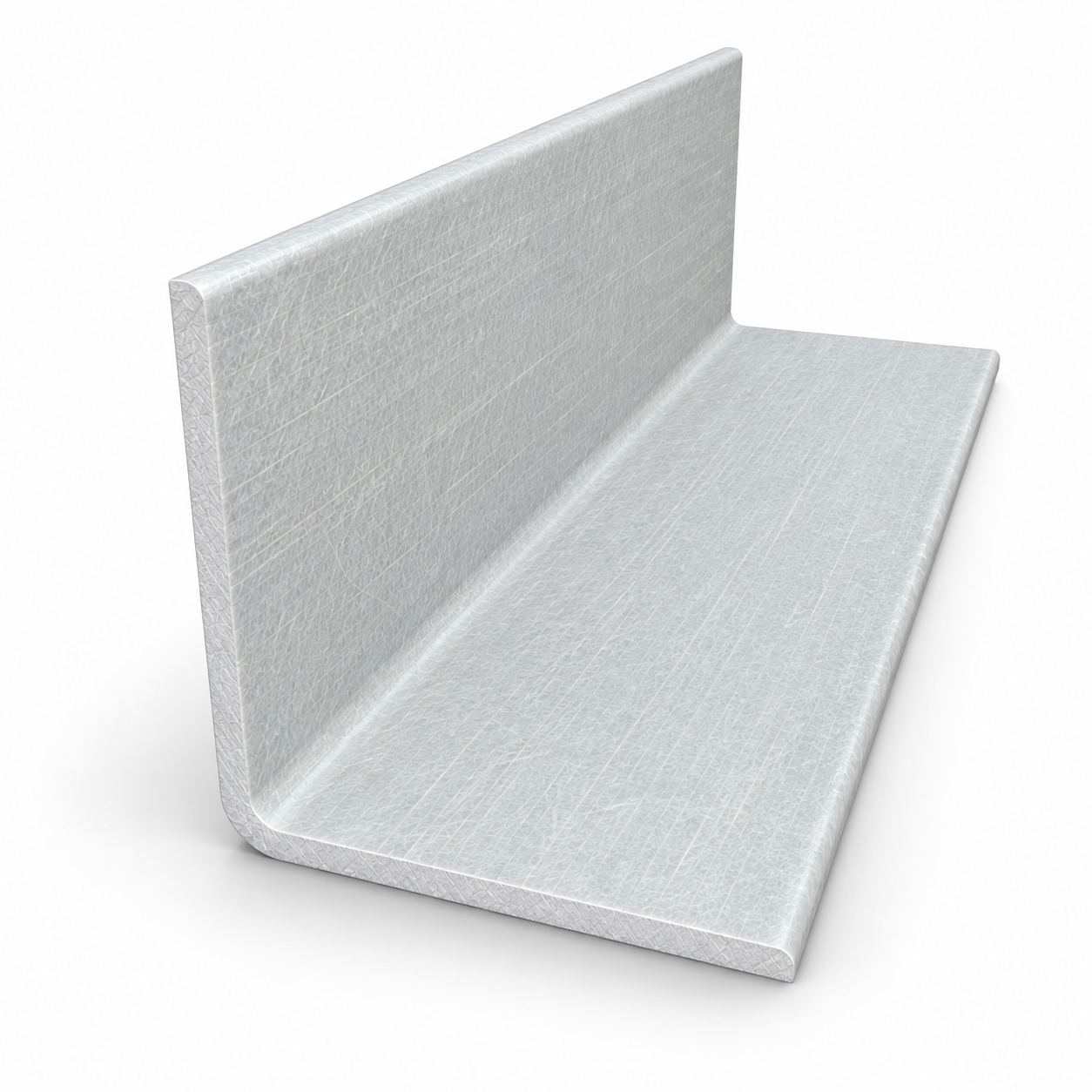
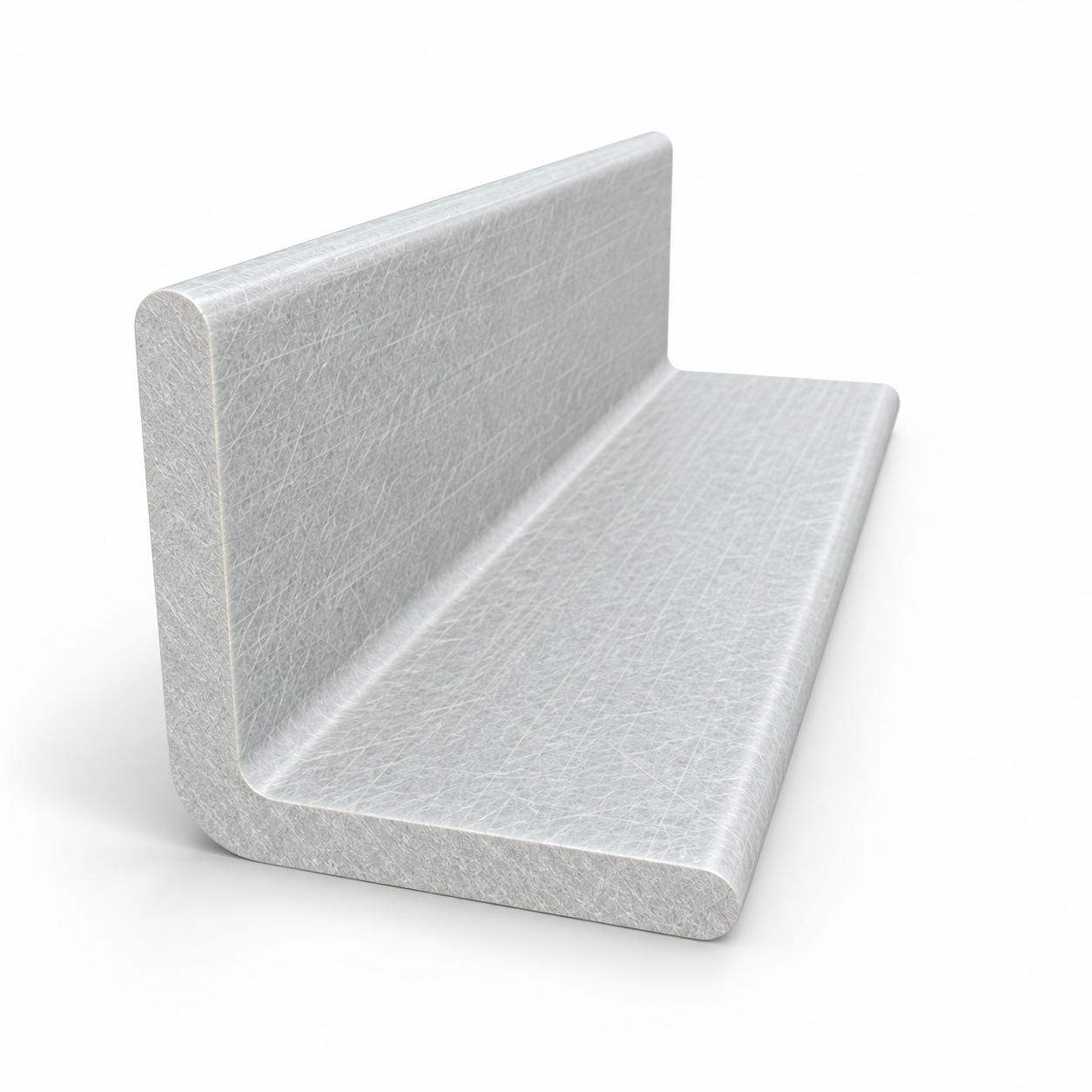
GRP angle profiles
GRP angle profiles are L-shaped structural profiles made from glass-fibre-reinforced plastic. They are manufactured using the pultrusion process and are used wherever a connecting, reinforcing or stiffening element is required that is also corrosion-resistant, electrically insulating and low-maintenance.
Dimensions
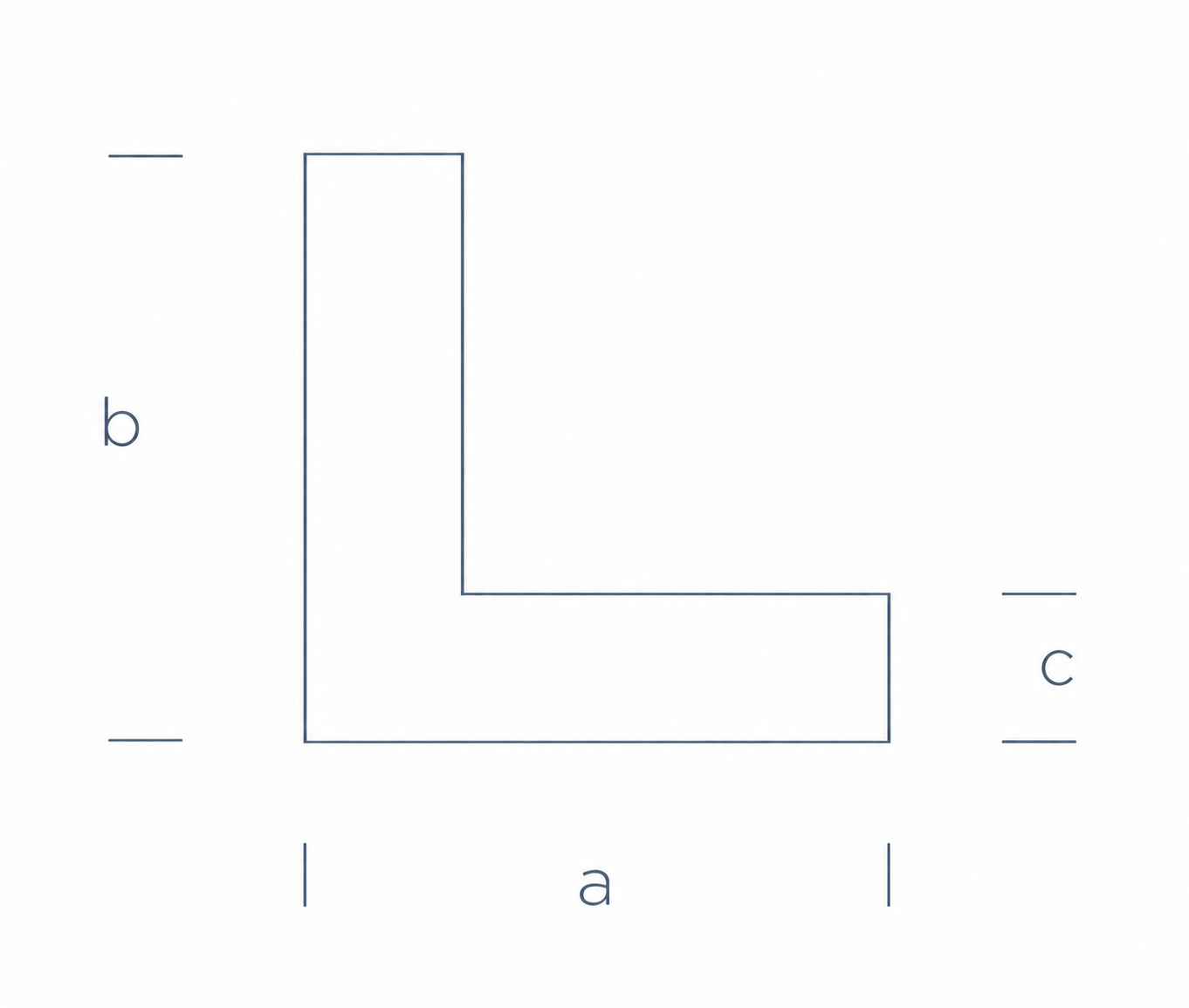
| a (mm) |
b (mm) |
c (mm) |
|---|---|---|
| 15 | 15 | 2.5 |
| 19 | 16 | 2 |
| 20 | 20 | 3 |
| 25 | 15 | 4 |
| 25 | 25 | 3 |
| 25.4 = 1" | 16 | 3 |
| 30 | 20 | 4 |
| 30 | 30 | 3 |
| 30 | 30 | 5 |
| 30 | 30 | 6 |
| 34 | 29.5 | 4 |
| 35 | 35 | 5 |
| 40 | 20 | 2 |
| 40 | 20 | 4 |
| 40 | 20 | 5 |
| 40 | 26 | 6 |
| 40 | 40 | 3 |
| 40 | 40 | 4 |
| 40 | 40 | 5 |
| 40 | 40 | 8 |
| 40 | 40 | 5 |
| 43 | 35 | 5 |
| 50 | 20 | 3 |
| 50 | 35 | 3 |
| 50 | 50 | 3 |
| 50 | 50 | 5 |
| 50 | 50 | 6 |
| 55 | 55 | 5 |
| 60 | 40 | 6 |
| 60 | 60 | 3 |
| 60 | 60 | 6 |
| 63 | 25 | 3 |
| 75 | 75 | 6 |
| 75 | 75 | 8 |
| 80 | 33 | 5 |
| 80 | 45 | 6 |
| 80 | 80 | 8 |
| 90 | 90 | 3 |
| 95 | 25 | 2 |
| 100 | 50 | 8 |
| 100 | 65 | 10 |
| 100 | 80 | 8 |
| 100 | 100 | 5 |
| 100 | 100 | 6 |
| 100 | 100 | 8 |
| 100 | 100 | 10 |
| 150 | 150 | 12 |
| 250 | 30 | 3 |
From tool development to the finished GRP profile
As a manufacturer, we produce made-to-measure GRP profiles and GRP angles for your specific application.
Through bespoke tooling development, we can produce the profile geometry and dimensions you require.
From development through to production, you receive bespoke glass-fibre-reinforced plastic profiles from a single source.
Frequently asked questions about the product
GRP angle profiles
Request a quoteGRP angle profiles are L-shaped structural profiles made from glass-fibre-reinforced plastic. They are manufactured using the pultrusion process and are used wherever a connecting, reinforcing or stiffening element is required that is also corrosion-resistant, electrically insulating and low-maintenance.
Dimensions
| a (mm) |
b (mm) |
c (mm) |
|---|---|---|
| 15 | 15 | 2.5 |
| 19 | 16 | 2 |
| 20 | 20 | 3 |
| 25 | 15 | 4 |
| 25 | 25 | 3 |
| 25.4 = 1" | 16 | 3 |
| 30 | 20 | 4 |
| 30 | 30 | 3 |
| 30 | 30 | 5 |
| 30 | 30 | 6 |
| 34 | 29.5 | 4 |
| 35 | 35 | 5 |
| 40 | 20 | 2 |
| 40 | 20 | 4 |
| 40 | 20 | 5 |
| 40 | 26 | 6 |
| 40 | 40 | 3 |
| 40 | 40 | 4 |
| 40 | 40 | 5 |
| 40 | 40 | 8 |
| 40 | 40 | 5 |
| 43 | 35 | 5 |
| 50 | 20 | 3 |
| 50 | 35 | 3 |
| 50 | 50 | 3 |
| 50 | 50 | 5 |
| 50 | 50 | 6 |
| 55 | 55 | 5 |
| 60 | 40 | 6 |
| 60 | 60 | 3 |
| 60 | 60 | 6 |
| 63 | 25 | 3 |
| 75 | 75 | 6 |
| 75 | 75 | 8 |
| 80 | 33 | 5 |
| 80 | 45 | 6 |
| 80 | 80 | 8 |
| 90 | 90 | 3 |
| 95 | 25 | 2 |
| 100 | 50 | 8 |
| 100 | 65 | 10 |
| 100 | 80 | 8 |
| 100 | 100 | 5 |
| 100 | 100 | 6 |
| 100 | 100 | 8 |
| 100 | 100 | 10 |
| 150 | 150 | 12 |
| 250 | 30 | 3 |
From tool development to the finished GRP profile
As a manufacturer, we produce made-to-measure GRP profiles and GRP angles for your specific application.
Through bespoke tooling development, we can produce the profile geometry and dimensions you require.
From development through to production, you receive bespoke glass-fibre-reinforced plastic profiles from a single source.
Frequently asked questions about the product
GRP angle profiles are L-shaped profiles made of glass-fibre-reinforced plastic. They are also known as GRP L-profiles and are used as connecting, reinforcing or stiffening elements in technical structures.
GRP angle profiles are corrosion-resistant, lightweight, electrically insulating and low-maintenance. These properties are particularly advantageous in situations where metal components are liable to corrode or where a low component weight is required.
Typical areas of application include plant engineering, water management, the chemical industry and the electrical sector. In these sectors, GRP angle profiles are used, for example, for substructures, frames and brackets.
Fibrolux offers isosceles and non-isosceles GRP angle profiles. In the dimension table, a and b represent the leg lengths and c represents the wall thickness, all in millimetres. ‘All dimensions’ shows the complete overview. The orange dots indicate items in stock.
In the case of isosceles GRP angles, both legs are the same length. Non-isosceles angles have legs of different lengths. The most suitable type depends on the installation situation, the connection surfaces and the requirements of your design.
For project-specific requirements, Fibrolux develops moulds for custom profile cross-sections on request. If you cannot find a suitable GRP angle in the table, please send us the required dimensions and a description of the application.
Please specify, where possible, the side lengths a and b, the wall thickness c, the required profile length and the quantity. Please also provide details of the intended application and any special requirements, for example regarding mechanical loads or contact with chemicals. A drawing may facilitate technical coordination.