






Kühlturm
Kühlturmbaustelle in Pulawy, Polen, 25 t GFK-Profile und Gitterroste
FIBROLUX WELTWEIT
Mit Hauptsitz in Hofheim, Deutschland, ist Fibrolux einer der führenden Pultrudeure in Europa und produziert seit 1979 hochwertige Verbundwerkstoffe. Unsere Projekte reichen von Island bis Australien. Wir entwickeln maßgeschneiderte Lösungen, die perfekt auf die Anforderungen unserer Kunden abgestimmt sind.


Kühltürme Kraftwerk
30 t GFK, Halbzeuge, für eine Ethanolanlage in Wanze, Belgien

Kühlturm eines Kraftwerks
Intel Kühlturm in Israel, 70 t GFK-Konstruktionen und Profile

Düngemittel-Anlage
In Sokhna, Ägypten, 100 t GFK-Konstruktionen und Profile

Kühlturm
In Schwarzheide, BASF, Deutschland, 126 t GFK-Konstruktionen und Profile

Kühlturm
Jubail, Saudi Arabien, 300 t GFK-Konstruktionen und Profile

Kühlturm
Vilvoorde, Belgien, 20 t GFK-Konstruktionen und Profile

Kühlturm
Hamm, Deutschland, 40 t GFK-Konstruktionen und Profile

Kühlturm
Stanlow, United Kingdom, 40 t GFK-Konstruktionen und Profile

Kühlturm
Kozienice, Polen, 75 t GFK-Konstruktionen und Profile

Kühlturm
Opole, Polen, 90 t GFK-Konstruktionen und Profile

Kühltürme Kraftwerk
140 t Konstruktionsprofile, Gitterroste etc. für ein Kraftwerk in Riga, Litauen

Kühlturm in Kohlekraftwerk
Naturzugkühlturm in Karlsruhe, Deutschland, Treppen, Leitern, Geländer, Podeste (27 t)

Kühlturm in Kohlekraftwerk
Naturzugkühlturm in Karlsruhe, Deutschland, Laufwege, Geländer, Podeste, Kabelkanäle, (27 t)

Kühlturm
Profilkonstruktion in einem Kühlturm in Swanbank, einem Industriegebiet in Queensland, Australien, 200 t

Kühlturm
Geländer im Kühlturm Budowa, Blok Nr 11 w Elektrowni Kozienice Hamon, Polen

Kühlturm
Lumut, Malaysia, Kabelleitern und Kabelkanäle, Geländer, Konstruktion
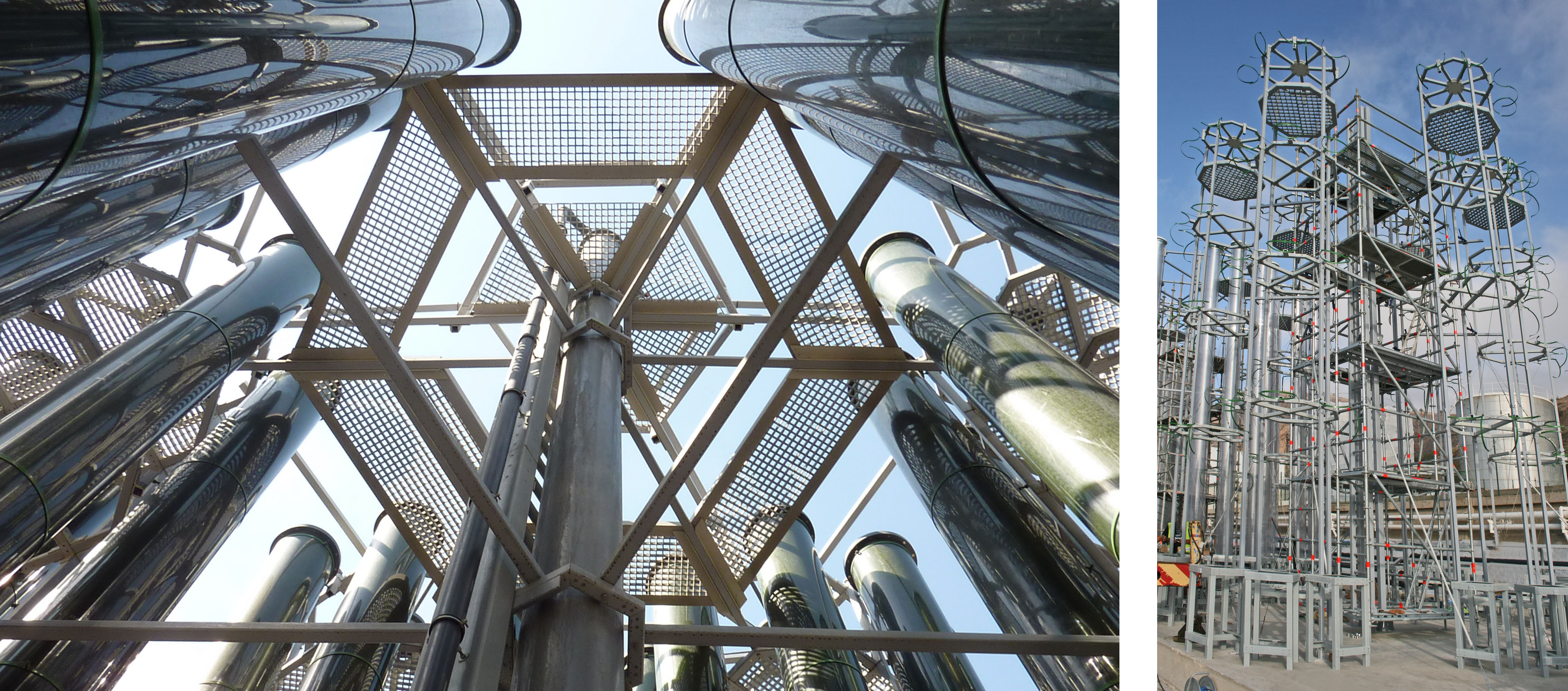
Algenzuchtanlage
Forschungsprojekt in Südspanien, Konstruktion ohne die vertikalen Röhren von Fibrolux.

Kühltürme Kraftwerk
Kühlturm in Israel.
Fertiger Kühlturm und Innenkonstruktionen

Zinkhütte
Große Kabelleiter im Außengelände der Zinkhütte in Nordenham, Deutschland

Erdwärmekraftwerk
auf der Hochebene Hellisheidi im Südwesten Islands
Treppenturm und Leitern vor der Montage

Erdwärmekraftwerk
auf der Hochebene Hellisheidi im Südwesten Islands.
GFK Kühlturmprofile geliefert von Fibrolux

Brücke
Brücke in Torun, Polen,
Fibrolux lieferte mehr als 16 km (320 t) eines großen Spezialprofils
zur Erweiterung der seitlichen Fußgänger- und Radfahrwege.

Kabelleiter
Auf einer Raketenbasis
In Nord-Norwegen

Tankabdeckung
Tankabdeckungen in Israel
KONTAKTIEREN SIE UNS UNVERBINDLICH!
Sie haben Fragen zu unseren Produkten oder den verschiedenen Anwendungsmöglichkeiten? Wir beraten sie gerne!